Past Event: Oden Institute & Dell Medical School
Multiscale Modeling for Predictive Cardiovascular Medicine
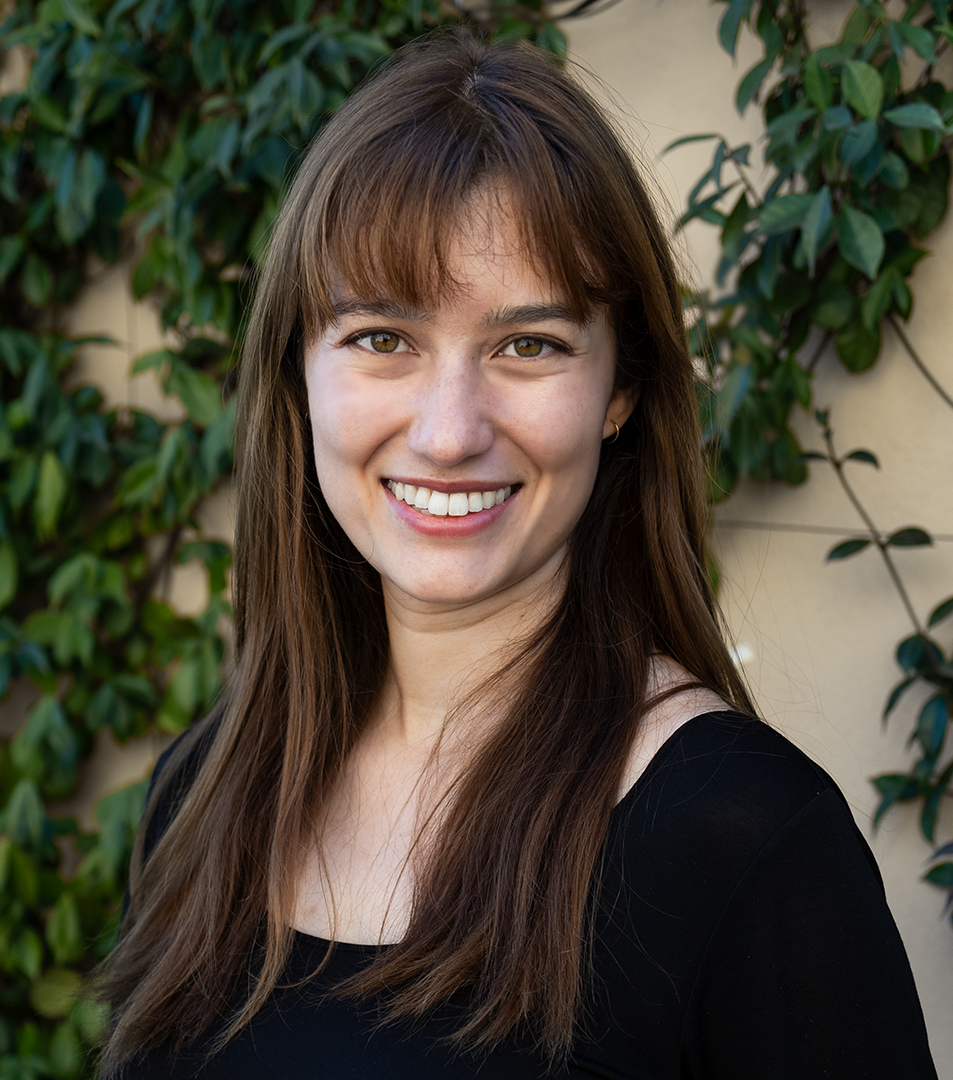
Erica L. Schwarz, Postdoctoral Researcher, Yale University
3:30 – 5PM
Thursday Jan 22, 2026
POB 6.304 and Zoom
Abstract
Cardiovascular cells are acutely sensitive to their biomechanical environment, and their responses to these forces can dictate the initiation, progression, and resolution of cardiovascular disease. Advances in computational fluid dynamics and solid mechanics have enabled detailed modeling of complex cardiovascular systems, laying the foundation for physics-based descriptions of cardiovascular function. The next frontier in cardiovascular modeling is leveraging these tools to predict long-term, patient-specific outcomes. Achieving this goal requires integrating organ-scale hemodynamics with cell- and tissue-level growth and remodeling to identify the biomechanical drivers of disease and enable precision treatment planning.
This seminar presents a multiscale computational framework that advances these goals by integrating mechanobiologically-driven growth and remodeling, tissue structural mechanics, and high-fidelity cardiovascular flow into a unified modeling approach. The talk begins with applications in congenital heart disease, where patient-specific simulations of tissue-engineered vascular grafts are used to predict postoperative hemodynamic evolution and identify clinically relevant thresholds that directly inform treatment planning. Building on this foundation, the framework is extended by incorporating mechanobiologically-driven growth and remodeling directly within a finite element solver, enabling simulation of long-term, patient-specific vascular adaptation. Emerging developments incorporating time-resolved gene expression data from RNA sequencing are then introduced to show how genetic programming interplays with mechanobiologically-driven growth and remodeling to drive arterial development. Finally, the seminar explores how these mechanistic simulations can be leveraged to generate robust in silico datasets that enable machine learning–based prediction of cardiovascular disease. Future opportunities for integrating biomechanics and data-driven modeling to improve risk stratification and treatment planning in cardiovascular disease will be discussed.
Biography
Dr. Erica L. Schwarz is a postdoctoral researcher at Yale University whose work focuses on computational modeling of cardiovascular growth, remodeling, and disease. Her research integrates physics-based simulations of blood flow and soft tissue mechanics with multiscale mechanobiology that links cellular behavior to clinical outcomes. Dr. Schwarz received B.S. degrees in Biomedical Engineering and Computer Science from Johns Hopkins University. She obtained M.S. and Ph.D. degrees in Bioengineering from Stanford University, where she conducted computational analyses of the first U.S. clinical trial of tissue-engineered vascular grafts for patients with congenital heart disease. As part of this work, she developed a three-dimensional fluid–structure–growth simulation framework that was nationally recognized for its contribution to computational mechanics through the Melosh Medal Competition. Her current research aims to incorporate time-resolved gene expression data and machine learning techniques into cardiovascular growth and remodeling frameworks to enable patient-specific disease forecasting and treatment planning.
Event information
Thursday Jan 22, 2026